Shirdi Sai Baba
He asked for two things, and never more than two
Faith, and patience. Śraddhā and saburi. In more than sixty years of people coming to him with every kind of trouble, this is what Baba asked of them — not conversion, not ritual, not money.
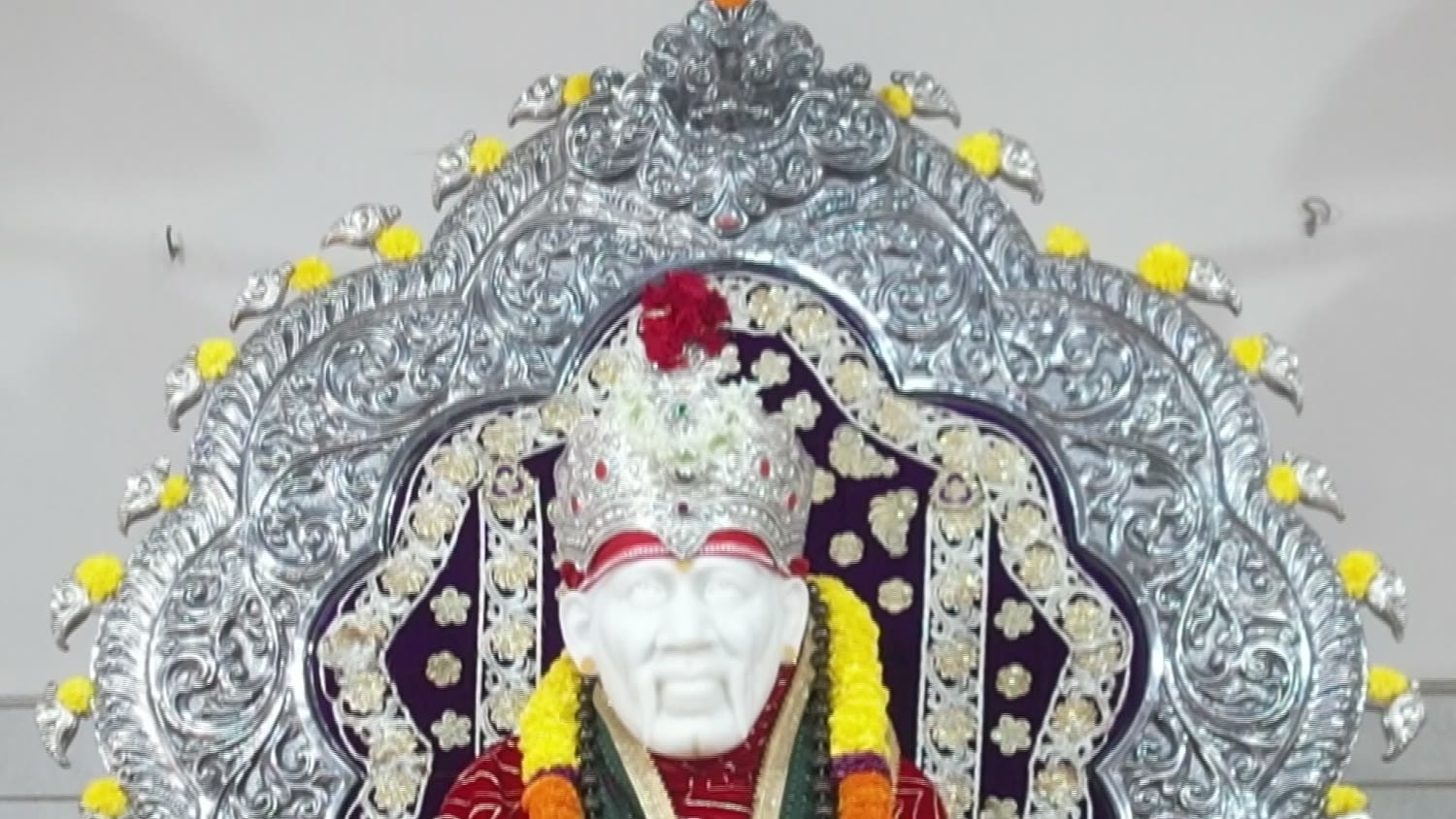
His life
What is known, and what is not
Very little about Baba's origins was ever established, because he declined to say. What follows is what is agreed.
c. 1858
Arrival in Shirdi
A young faqir arrived at the village of Shirdi in Ahmednagar district. Nobody knew where he had come from, and he never said. He was given the name Sai by a villager greeting him at the temple gate, and he kept it.
The Dwarkamai
A ruined mosque, and a fire
He took up residence in a dilapidated mosque, which he called Dwarkamai, and lit a fire there — the dhuni — which he kept burning for the rest of his life. He gave its ash, udi, to everyone who came. Every Sai temple since has kept a dhuni, including this one.
Sabka Malik Ek
One God governs all
He belonged to no religion and refused to be claimed by any. Hindus and Muslims both came to him and both were received identically. He read the Quran and the Ramayana. He is buried in a Hindu temple and was called a faqir all his life. Sabka Malik Ek was not a slogan; it was how he actually lived.
Why fear when I am here
What he told the frightened
The sentence devotees carry more than any other. He said it to people in real trouble — illness, debt, grief — and they found it sufficient. It remains the sentence most often repeated in this temple.
15 October 1918
Mahasamadhi
Baba took mahasamadhi on Vijayadashami. The day is observed as Punyatithi at every Sai temple, and is the most solemn observance of this temple's year.
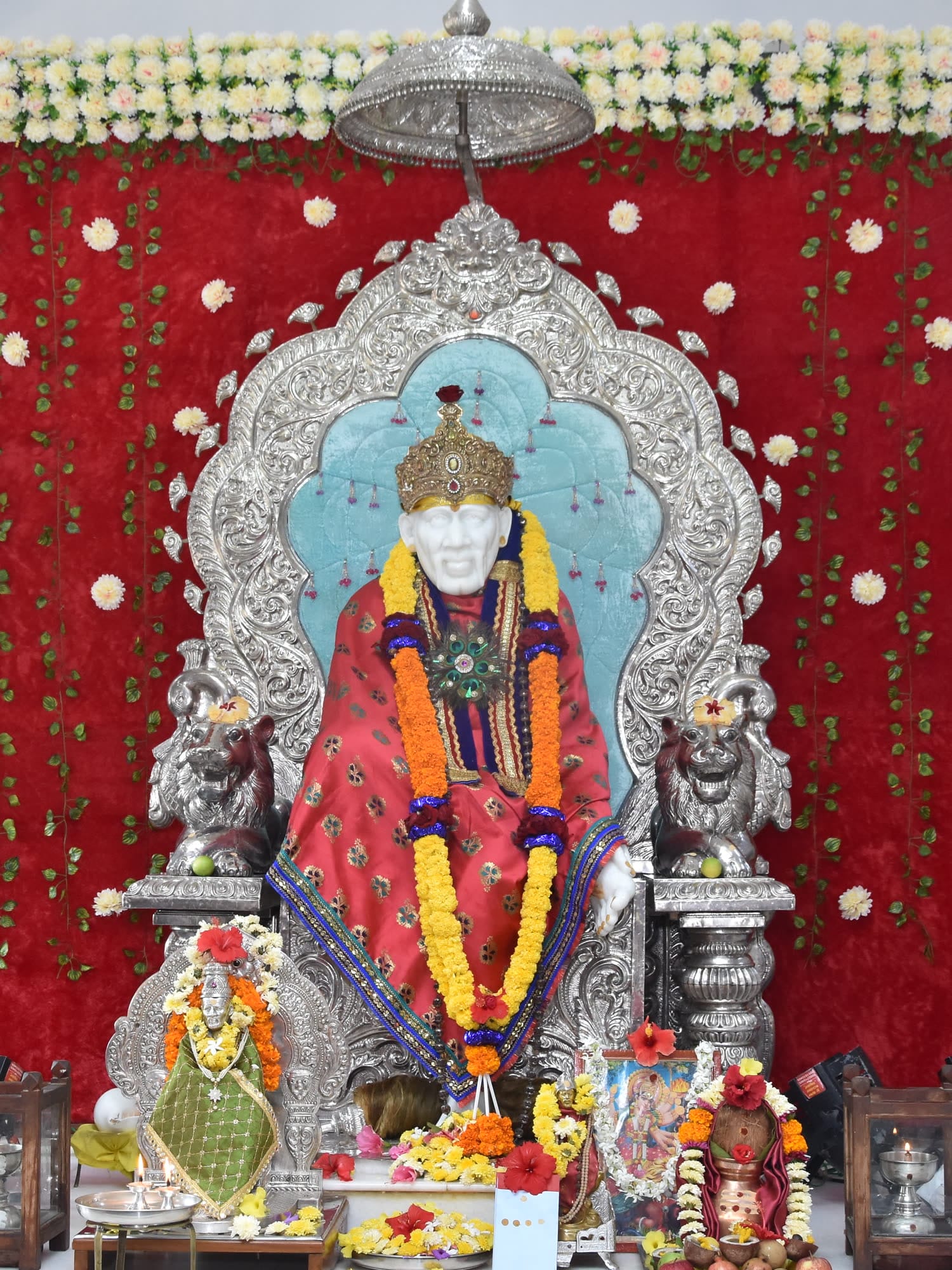
What he asked for
Two words, and one sentence
Baba gave no philosophical system and wrote nothing down. What he left is small enough to remember and hard enough to practise.
श्रद्धा
Śraddhā
Faith
Not belief in a doctrine. Organisation — the kind that lets a person keep going when the outcome is not yet visible.
सबुरी
Saburi
Patience
The harder of the two, Baba said. He tested it constantly, often by simply making people wait, sometimes for years.
सबका मालिक एक
Sabka Malik Ek
One God governs all
The reason this temple has never asked a visitor's caste, community, or religion, and never will.
The temple at Gadag
Baba's presence, kept in North Karnataka
Devotees in Gadag maintain the full Shirdi observance: the dhuni burning without interruption, four aartis marking the day from before dawn to late night, the Thursday palki procession, and annadan served on Thursdays and special occasions to everyone who comes.
It is not a large temple, and it does not try to be. What it offers is continuity — the same four aartis at the same hours, the same fire kept without a break, the same shared meal on Baba's day. Devotees who have come here for years say this is precisely the point.
The temple sits in Gadag town, in a district known across Karnataka for Western Chalukyan stone architecture. That inheritance shapes how this place understands craft and worship, and it shapes the ornament of this website.
Living traditions
What is kept here, without a break
Dhuni
The fire that has never gone out
At the heart of the temple burns the dhuni — the sacred fire Baba tended at Shirdi and which every Sai temple keeps alive. Its ash is udi, given to devotees as prasad. It is not decoration. Someone feeds it, every day, without a break.
Śraddhā · Saburi
Faith and patience
Baba asked for two things only, and never more than two: śraddhā, faith, and saburi, patience. Devotees who come to Gadag carry these two words home more often than they carry anything else.
Palki
Thursday belongs to Baba
Thursday is Baba's day. In the evening his padukas are carried in the palki procession, accompanied by bhajan, through the temple precinct. If you can choose your day to visit, choose a Thursday.
Annadan
No one leaves hungry
On Thursdays, on festival days and on other special occasions, prasadam is served free to every devotee, regardless of who they are or what they can give. Feeding whoever arrives is the oldest Sai tradition there is, and the temple keeps it on Baba's day.